
The Story
Four generations,
one instinct
Knowing what is genuine, and what it is worth.
Where we come from
Patan, Gujarat
Our family comes from Patan, an old city of scholars and merchants in northern Gujarat, long known for its libraries of Jain manuscripts.
The house was founded in 1905. Like many Jain merchant families of the region, it was built on trust: a close circle of relatives and partners, where a handshake was enough and a name was everything.
The family house still stands in Dhandherwada, an old mohalla of Patan that is also home to the ancient Jain shrine of Kankan Parshvanath. The “Residential Building of Hemchand Mohanlal Zaveri and other buildings of Dhandherwada” is the first entry in INTACH’s list of the heritage monuments of Patan District.
Source: Indian National Trust for Art and Cultural Heritage, “Listed Monuments of Patan District, Gujarat”, 2012.
Through the years
The house is founded
The family enters the gem trade, dealing in diamonds and coloured stones.
Hemchand Bros., Antwerp
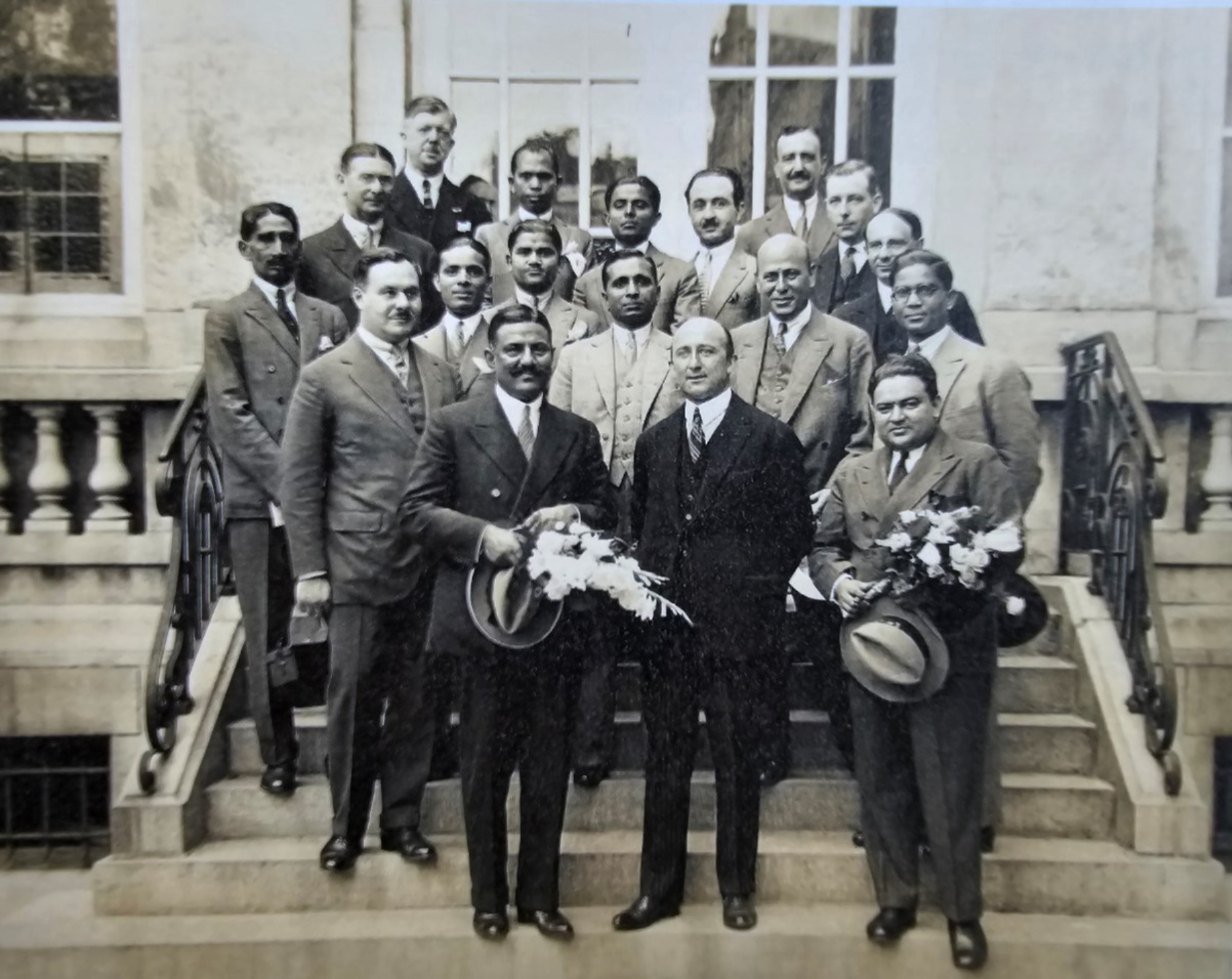
After the First World War, Antwerp overtakes Amsterdam as the world’s diamond centre. Hemchandbhai Mohanlal Jhaveri is among the first Indian diamantaires to settle there, trading as Hemchand Bros. In 1928 he is photographed on the steps of the Diamond Bourse with the Nawab of Palanpur and the Maharaja of Bikaner.
The Round Table Conferences
Hemchandbhai Mohanlal goes to London for both Round Table Conferences, where India’s future is argued before the British government. At the second, in 1931, he is there alongside Mahatma Gandhi.
Home, at the war
With the outbreak of the Second World War, the family leaves Europe and returns to India.
Mumbai
The house settles in Mumbai, with offices at Dharam Palace and in Zaveri Bazaar, the old heart of India’s jewellery trade. Home is Sans Souci, on Malabar Hill.
Separate ways
In time the brothers each take their own path. Ours is the line of Nitin Mohanlal Hemchand and his wife, Vasanti Nitin Hemchand, who carried the business on together, each with their own clients.
Four rooms
Natural and lab-grown diamond jewellery, art and antiques, and Rooh, which brings paintings to life. Still family-run, still by appointment.
Mumbai
Sans Souci
When the family came home from Europe, it made its home on Malabar Hill.
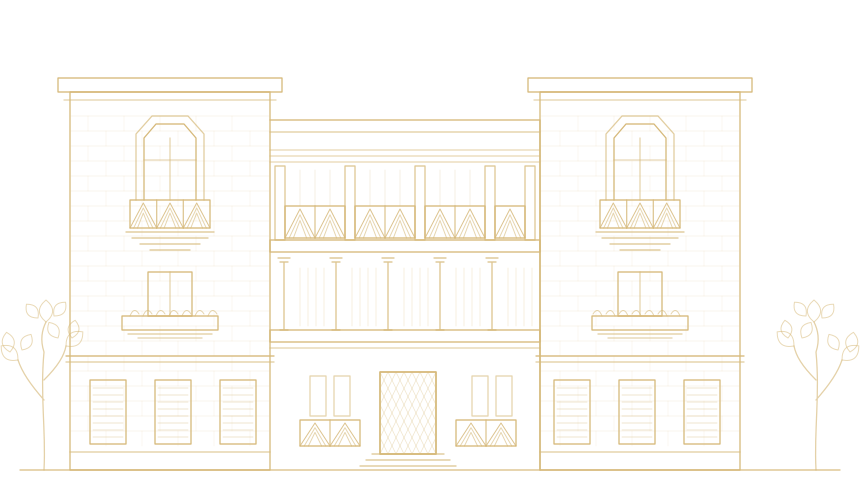
Sans Souci is an Art Deco bungalow of the period, with a stone tower, deep verandahs and the stepped, chevroned ironwork that Bombay built in those years. The name is French for “without a care”. It is still the family home.
Sans Souci is listed by the Art Deco Mumbai Trust: artdecomumbai.com (architects Master, Sathe & Bhuta).
From the archive
The Diamond Bourse, 1928
The family keeps a print of this photograph. It shows the Indian and European merchants of the Antwerp bourse welcoming the Nawab of Palanpur, when Indian diamantaires were still a rarity in Europe.
The photograph is also reproduced, from the collection of Suresh Mehta and Fragrant Folios: The Palanpur Story, in Sifra Lentin’s “A century of Bombay–Antwerp diamond trade” (Gateway House, 2024).
The family
Four generations
Each of us keeps a monogram of our own, drawn in the same diamond.